
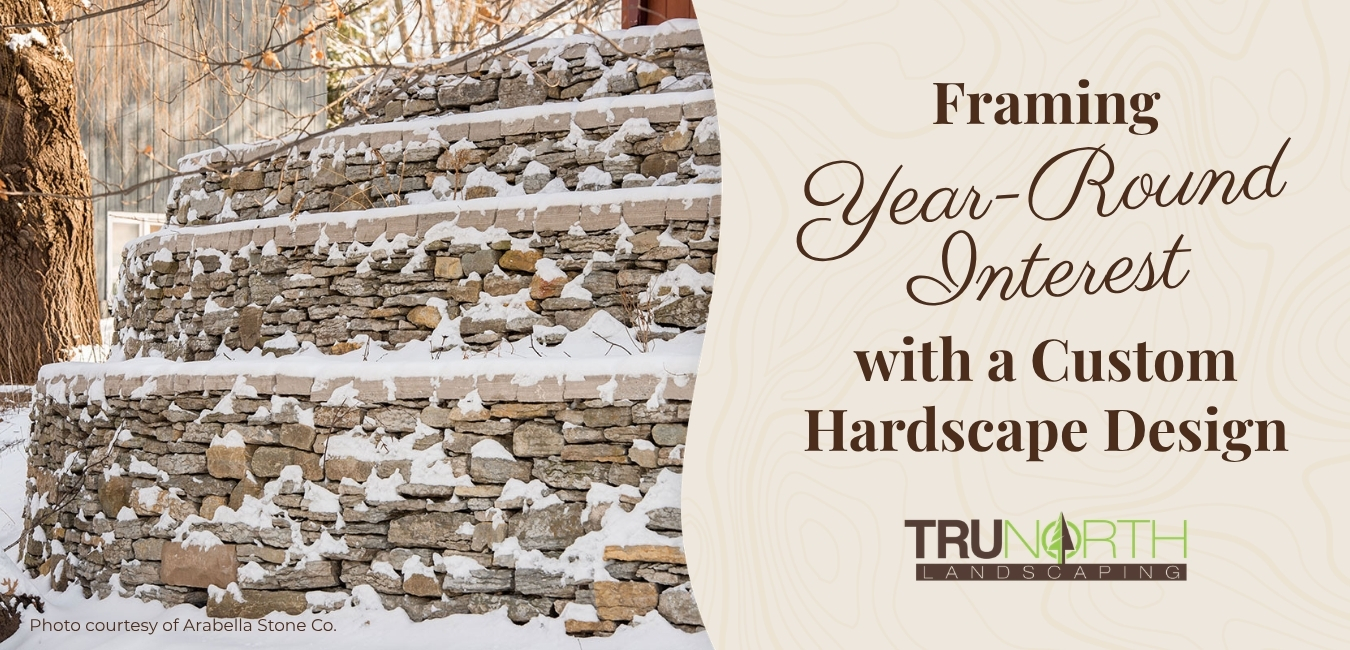
Look out your living room window on a grey Tuesday afternoon in January.
Staring out at Traverse City or Glen Arbor in the dead of winter usually means looking at a giant sheet of blank white paper. The turf is buried. The perennials are long gone. The entire landscape has effectively vanished.
This disappearing act points directly to a lack of skeletal structure.
In Part 1 of our mini-series, we broke down how to cultivate a 12-month garden by layering structural evergreens, late-season berries, and ornamental grasses. But plants are only half the equation. While foliage provides the shifting seasonal wardrobe, thoughtful winter hardscape design acts as the permanent skeleton of a premium property. Stone, pavers, timber, and light don’t go dormant. When the green elements vanish for six months, structural masonry steps into the spotlight to provide visual depth, shadow lines, and architectural boundaries your eyes crave when the rest of the world feels…flat.
Here are the design choices that make your property look intentionally crafted, 365 days a year.
Anchor Your Sightlines with Stone Walls
Snow acts like a giant eraser, smoothing out your property’s natural slopes until lawn and garden beds merge into a single void.
You need something to break up the white!
Retaining walls and boulder outcroppings do much more than hold back soil. They act as heavy visual anchors designed to break up white space. A well-built stone wall creates a dark, permanent horizontal boundary that stays visible no matter how deep the snow gets.
Material selection directly drives how that wall reads from inside your home:
- Coarse Textures: Split-face granite, weather-edge limestone, and native fieldstone catch the low winter sun. Instead of appearing flat, they cast long, dramatic shadows across the snow drifts.
- Color Tone: Deep greys, rusty tans, and dark charcoals provide immediate contrast against a white backdrop. They keep your garden beds framed even while the roots underneath rest for the season.
- Strategic Placement: Aligning stone walls directly with your primary window sightlines gives your eyes a clear, structured place to land every time you look outside.
Related Reading: How does Northern Michigan Winter Weather Impact my Landscape?
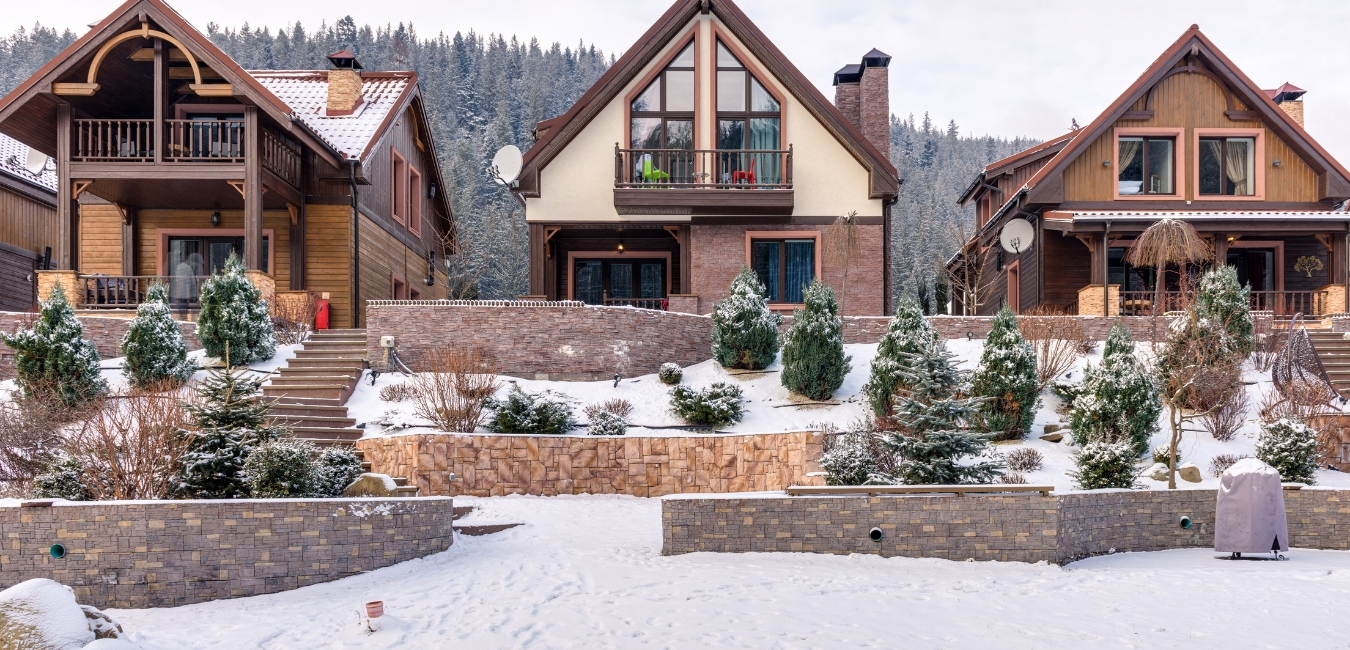
Walkways That Outline Your Landscape in January
Walkways act as the permanent ink lines of your estate. During July, they frame your flower beds. Come January, when those beds disappear under foot-deep snow, a well-designed pathway becomes the main visual grid defining your yard.
Designing a walkway for year-round visual impact comes down to three intentional choices:
- Color Contrast: Rich charcoal, warm copper, or deep tan stone creates a bold line against snowbanks. Light grey stone tends to wash out on overcast days, but darker tones keep the layout easy to read from your windows.
- Pattern and Joint Definition: Large-format pavers or natural flagstone with wide, defined joint lines retain their grid-like texture even under a light dusting of frost. That repeating geometric pattern keeps your patio and paths from looking like a featureless slab.
- Wider Proportions: Narrow three-foot paths get swallowed up when snow piles along the edges. Designing main walkways at four to five feet wide means that even when snow encroaches, the intentional shape of the stone path remains prominent.
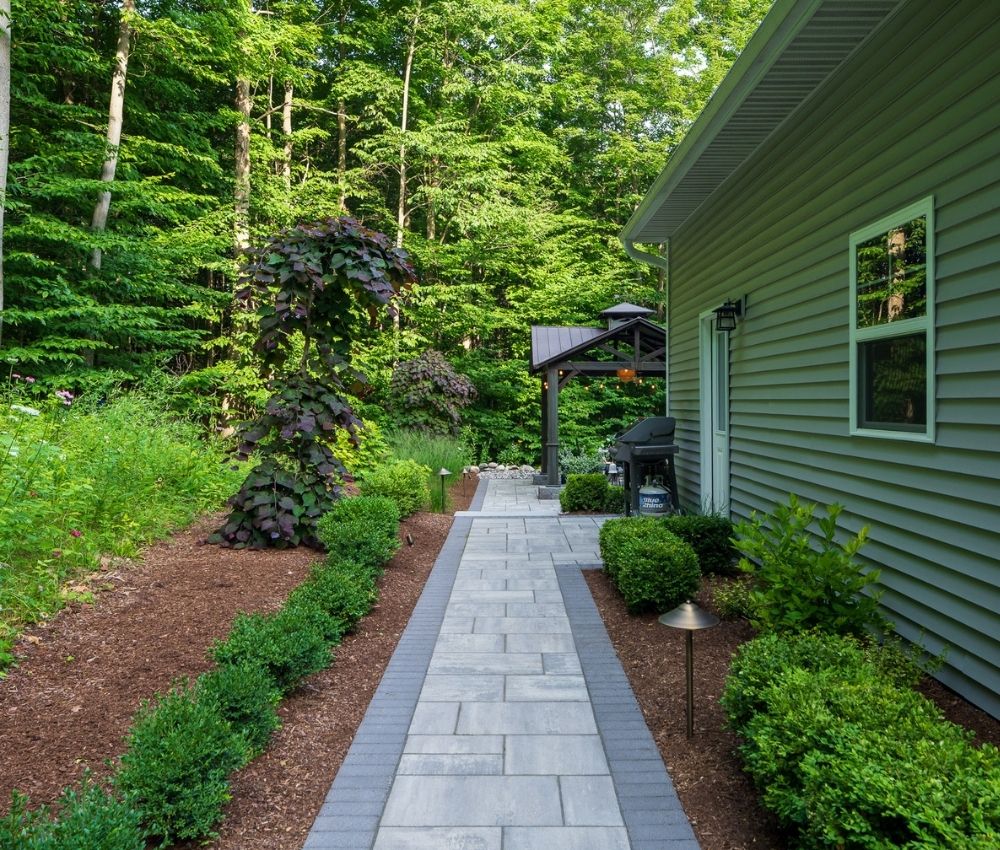
Darker Stone Tones
Complements green lawn and bright perennials in the summer and creates high-contrast lines through snow drifts.
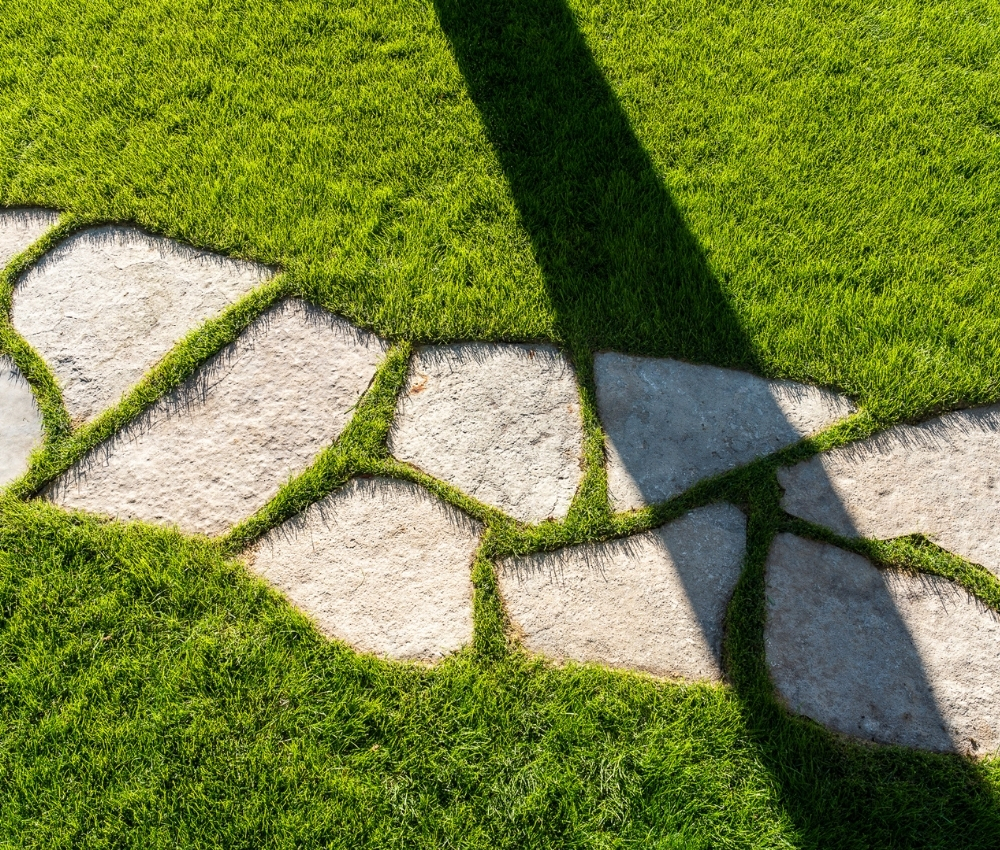
Defined Joint Patterns
Adds subtle texture beneath patio furniture in the summer and keeps geometric grid lines visible under frost.
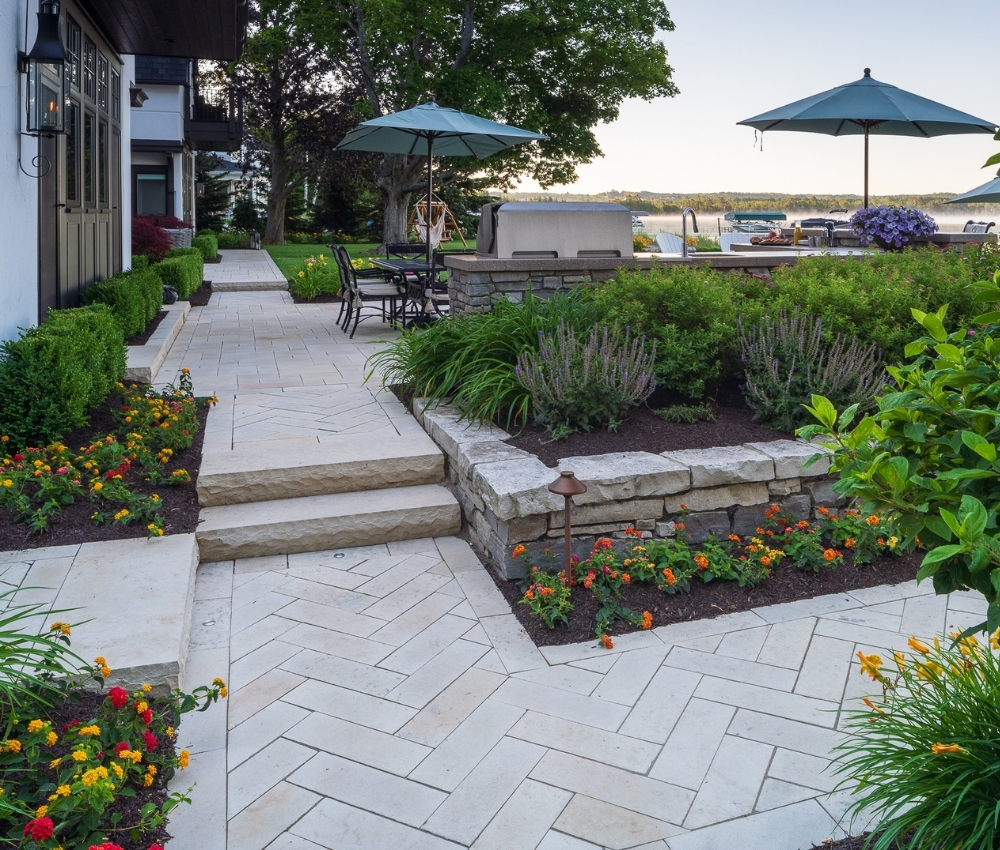
Generous Path Widths
Accommodates side-by-side walking in the summer and prevents snow piles from completely hiding the path layout in the winter.
When radiant snow-melting systems are added underneath, these design choices really shine. Instead of a buried surface, you get a clean, dry expanse of dark stone framed by banks of snow. It shows off the full geometry of your entryways all winter long.
Strategic Winter Hardscape Design Using Architectural Fire
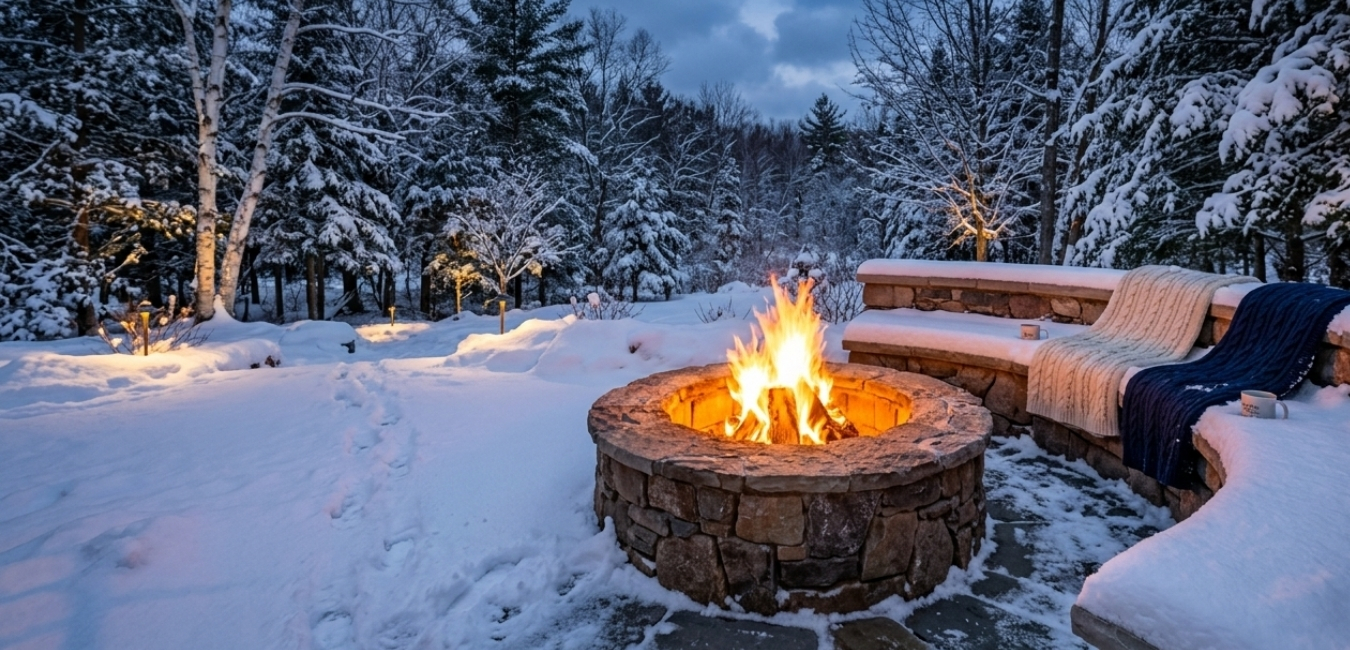
A patio layout shouldn’t feel empty or abandoned six months out of the year. Integrating built-in stone fire features brings vertical height, warmth, and physical destination to a cold landscape.
Design-wise, fire features do two major jobs in a winter view:
- Vertical Focal Points: An outdoor stone fireplace acts as a towering visual pillar that cuts through the flat, horizontal snowscape. It draws your eyes straight out into the yard.
- Color and Motion: A built-in stone fire pit introduces flickering orange light that contrasts brilliantly against cold blue snowdrifts. It transforms a dark, silent backyard into a vibrant evening destination.
Paired with low, stone seat walls, fire features turn a frozen patio into a sculpted outdoor room. It looks inviting whether you are standing around the fire or viewing it from the warmth of your kitchen.
Sculpt the Night with Layered Light
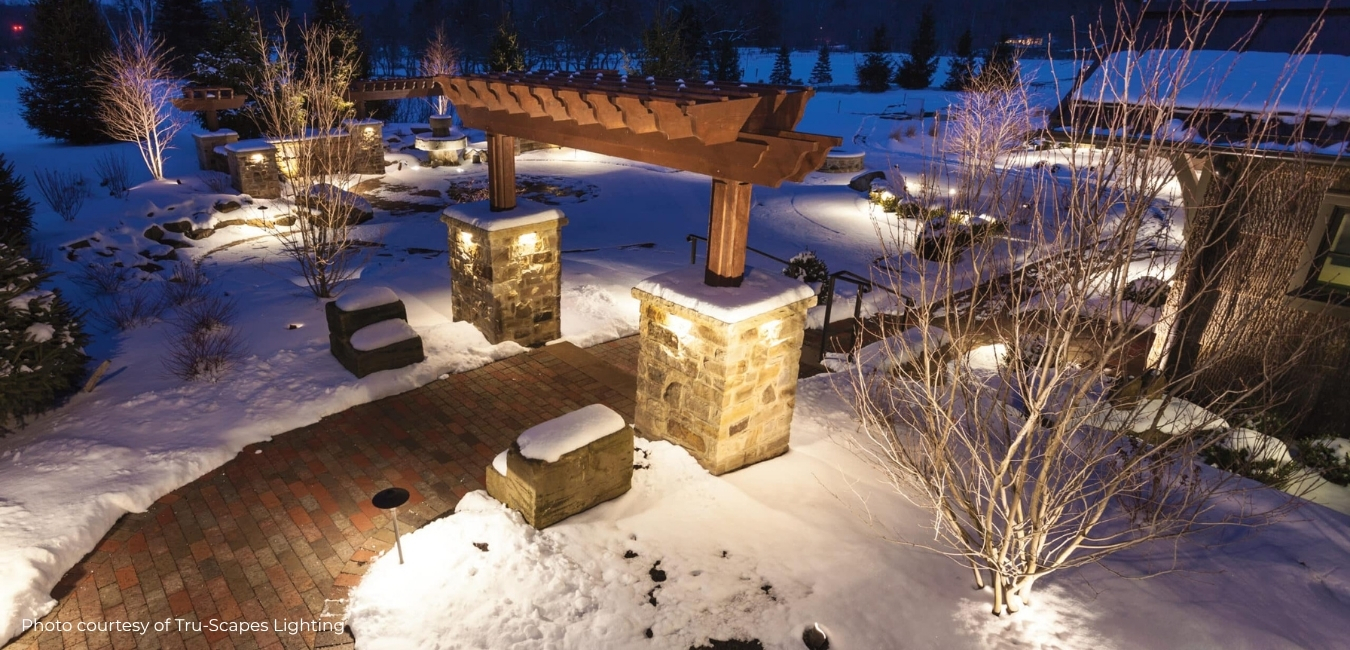
Winter sunsets arrive before 5 pm up north. Because of that, outdoor lighting becomes a core design layer rather than an afterthought. Without intentional fixtures, your windows simply turn into black mirrors the moment dusk falls.
A solid winter lighting strategy relies on warm-toned LED fixtures around 2700K to highlight stone textures and tree silhouettes.
- Tree Uplighting: Angles warm light upward into the naked branches of birch, oak, or structural evergreens. It casts intricate shadow patterns across the snow groundcover.
- Hardscape Wash Lights: Tucked discreetly beneath retaining wall caps and step risers to accentuate raw stone textures while illuminating pathways.
- Bollards and Path Lights: Cast low, warm pools of light across cleared stone walkways to reinforce the geometric boundaries of your estate after dark.
What Now?
Designing a property with permanent stone, fire, and light requires a long-term vision. True winter hardscape design is about anticipating how heavy materials, shadows, and sightlines will read from indoors when the lawn is completely buried.
You have two practical ways to move forward:
- The Phased Approach: Focus on a single visual anchor this season. Install a stone retaining wall or a custom fire feature to give your primary indoor sightline immediate structure before winter hits. From there, you can add walkways and lighting in future phases.
- The Master Plan Approach: Work with a design professional to build a complete multi-season master plan. This method aligns your hardscape framework, lighting zones, radiant heating, and 12-month plantings into one cohesive, four-season property plan.
Designing during the summer and early fall gives us the time to evaluate your primary window views, analyze site topography, and curate materials that keep your home looking magnificent all year long.